Hungarian Military Uniforms - The 32nd Budapest Guards and Ceremonial Regiment (Hungarian: MH 32. Budapest Őr-és Díszezred) is a parade infantry unit of the Hungarian Army with headquarters in Budapest of the Hungarian Defense Forces. It is under the direct command of the Budapest Garrison Brigade "Vitéz Sándor Szurmay" from the HDF Geral team.
In addition to ceremonial duties, the soldiers of the regiment, along with their historical predecessors, participated in 14 wars, 135 sorties and 6 UN and NATO missions.
Hungarian Military Uniforms

Currently, the headquarters is located in Budapest. All soldiers in the regiment must meet the minimum height requirement of 180 cm (5 ft 11 in).
Dec 22, International Workshop \
It was the 7015th Parade Regiment of the Hungarian People's Army ( Hungarian : Magyar Néphadsereg 7015 Dísz -és őrezred ), at the time the official honor guard and escort of the leadership of the Hungarian People's Republic. On May 15, 1991, the regiment was renamed the 32nd Budapest Guards Regiment by order of the Minister of Defense of Hungary, Lajas Fura. On October 1, 2000, the regiment was renamed the 32nd Budapest Guards and Ornam Regiment. Since January 1, 2002, the organizational structure of the regiment has been changed as part of the reform of the troops. Two independent units were formed from the staff of rear support and a support battalion from the division.
On New Year's Day 2003, the first and last commander of the regiment was Colonel Laszlo Talpas, who previously graduated from the military observer training course in 1998 and served in the UN International Mission in Western Sahara in 2000. It was valid until December 31, 2006. , at this time was disbanded to be replaced on 1 January 2007 by a detachment of the Ceremonial Battalion (part of the HDF MH Support Brigade "Támogató Dandár"). During this period, members of the regiment participated in many HDF operations and their overseas assignments were converted to the Nemzeti Honvéd Díszegység (Ceremonial Regiment of the National Defense of the Motherland) on 1 January 2011 and commissioned on 25 April as part of the MH TD.
The decision to restore the Guard of the Holy Crown was made on 20 December 2010 (based on the 1928 Act) with the support of the Hungarian Royal Guard. On May 30, 2011, in connection with the revival of traditions, the Guard of the Holy Crown was restored and after 66 years it was again given the right to protect the Holy Crown (the last time the Guard of the Hungarian Royal Crown in 1944).
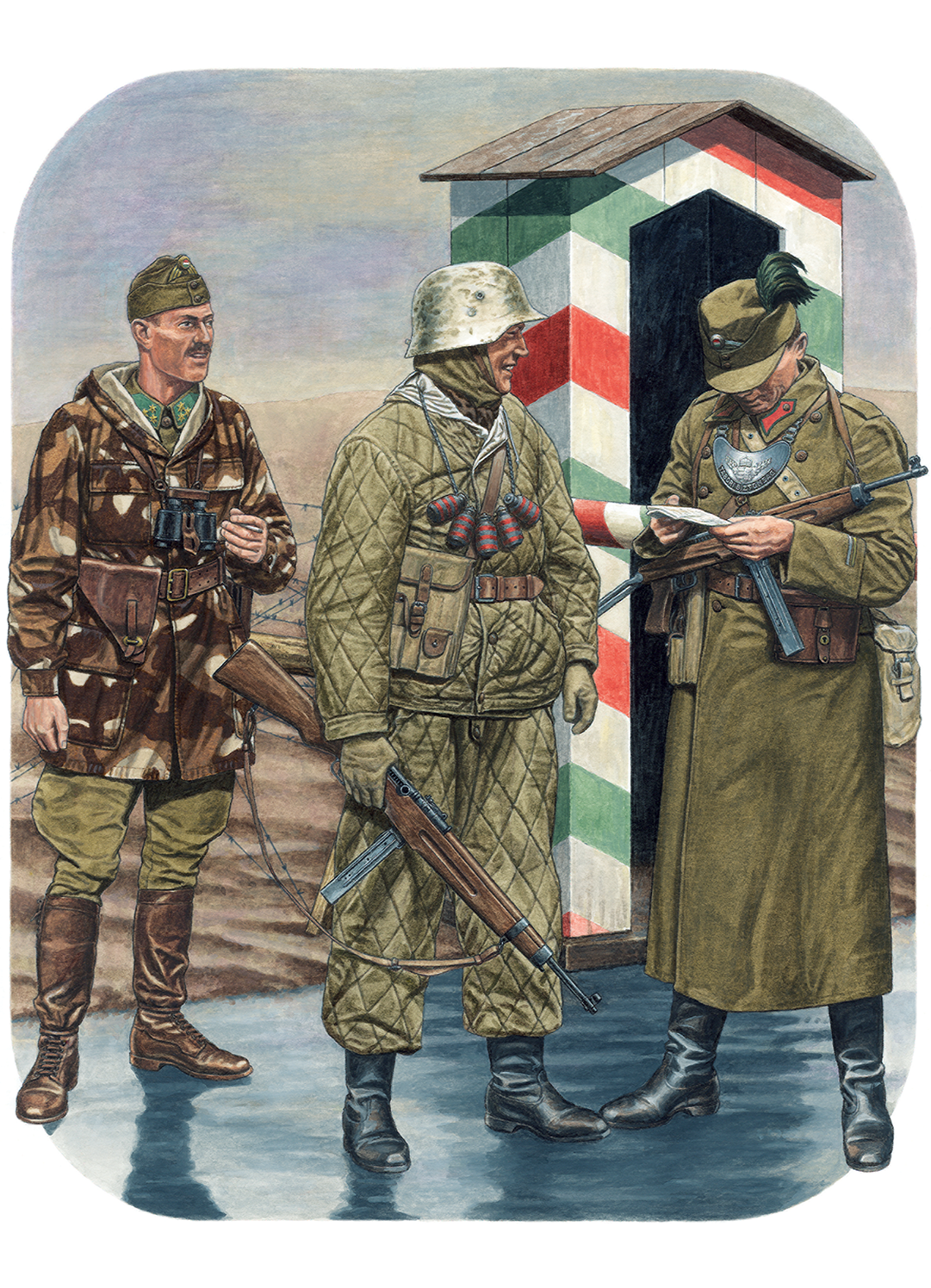
In 1949, a new form was introduced that resembled the Soviet model and was formed taking into account Hungarian traditions. The cotton uniform was introduced in 1960. In 1990, a new tunic and other clothing were introduced in a tradition that existed during the Horthy era but was later changed to avoid fascist comparisons. For a time, the unit used a gray field uniform until a brown dress uniform was introduced in the early 2000s.
Murray Headlines Day 2 Of Global Force Next
During the changing of the guard, the guards wear sunglasses during the ceremony and while on duty.
Since 1990, the guard has been wearing a local ski hat known as Bocskai. Prior to its introduction, the unit used a peaked cap with a communist emblem at the top, similar to the 1958 Soviet model. It is named after the crown of Steph Botska, which the Sultan of the Ottoman Empire handed over to the Transylvanian prince Steph Botska in the 17th century.
At protocol ceremonies, the procession is musically accompanied by the Central Military Band of the Hungarian Defense Forces, the representative musical ensemble of the HDF. Being in the same garrison brigade gives the regiment and gang direct access to each other. Today, the Ctral Band has a drum set as well as a fanfare set. The group wears the same uniform as the regiment.
The 32nd Infantry Regiment Memorial (32. Gyalogsági ezred Emlékmű) is located on Barós Street in Budapest's Jozefvaros district. A monument in honor of the ethnically Hungarian 32nd Infantry Regiment of the Royal Hungarian Armed Forces of the Austro-Hungarian Army, which was based in Des (now Dej, Romania). The monument was chosen because only the boots have the same number 32. It was erected in 1933 after a public donation by István Štjörði in honor of members of the regiment who served in the First World War.
Issued By Abdul Cigarettes
It depicts a soldier holding a bayonet-gun in his left hand and a graduated helmet in his right.
Regimental Color Guards are the ones who do the full goose step in slow motion during military parades. A modified goose step is performed by the rest of the device, with the foot only a few centimeters off the ground. The unit soon marches in a similar fashion to the United States Army and the British Army. During a normal walk with their rifles cocked, they usually do a goose step when their signature rifle hand is in the sling position.
The regiment has been firing at the landing ceremony at the gates of the Sándar Palace (the official residence of the President of Hungary) in Budapest since the dissolution of the Hungarian People's Republic in 1989 and President Ferko Madl moving into the palace in 2003.
Only two people will be on duty, because at 12.00 six people come to the shooting. Drummer and officer are also prestigious.
Z Qa585 689
Another changing of the guard ceremony takes place in the Bathing Hall of the Hungarian Parliament building on Kossuth Square, where the guards guard the Holy Crown of Hungary. This has been done since August 20, 2012.
The public duties of the regiment are carried out by a team of four at the Tomb of the Unknown Soldier at the Millennium Monument on Hősök tere (Heroes' Square). A tradition that began in the communist era as the main ceremony during the 7015th HPA parade. unit. This usually took place between March 15 and October 23 (both dates being Hungary's National Day), during which he was on continuous duty in the square.
A regimental officer accompanying Vladimir Putin and Viktor Orbán in the corridors of the parliament in 2017.

Outside of Hungary, the regiment also conducts military tattoo display exercises and marches in military parades (mostly in NATO allies). In 2019, the regiment's platoon participated in the annual Constitution Day parade on May 3 in Warsaw, Poland. He has also previously participated in the 2007 and 2014 Bastille Day military parades in Paris and the 2011 Festa della Repubblica in Rome, Italy.
May Programs Conclude With A Commemoration Of African American Veterans
Military drone range, laser range finder military, military range bags, military range targets, long range military radio, military radio range, military range finder, military long range binoculars, range rover military discount, military range rover, range of military drones, military range bag
0 Comments